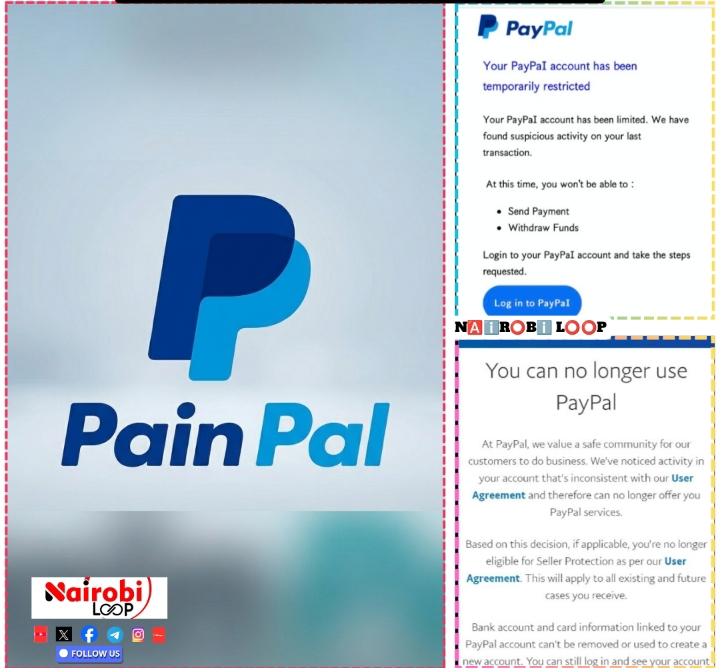
For Kenyan freelancers, the news that PayPal is freezing and blocking accounts is not new. It is a familiar wound.
For years, Kenyan online workers such as academic writers, content creators, graphic designers, and developers, have watched helplessly as PayPal restricted their accounts at the worst possible moment, almost always when they had accumulated significant amounts of money. The timing has never felt like coincidence.
The pattern is well known. A freelancer grinds for weeks, completes client after client, builds up a balance, and then one morning logs in to find their account restricted. PayPal demands contracts, utility bills, bank statements, proof of address. In a country where physical addressing is informal and most work is agreed over email or through platforms, meeting those requirements is often difficult. The money then sits there, unreachable, for 180 days, and in some cases never fully returns to the user.
PayPal frames all of this as anti-money laundering compliance. But Kenyans have been asking a harder question for years: why does legitimate income from a UK client or a US publication suddenly look like fraud the moment it lands in a Kenyan account?
The situation has not improved despite PayPal integrating with local financial institutions. The tighter controls follow Kenya’s placement on the Financial Action Task Force grey list since February 2024, and industry observers also point to rising fraud risks tied to the platform’s integration with M-Pesa. A partnership that was supposed to make things easier has instead given PayPal more reason to scrutinize Kenyan transactions. Equity Bank’s involvement has similarly done little to shield ordinary users from restrictions.
The American firm has told affected users that remaining balances may be held for up to 180 days to cover chargebacks or other financial liabilities, a policy that effectively punishes users before any wrongdoing is established. Accounts that remain non-compliant for more than six months risk permanent deactivation, with any remaining funds not returned to the sender. In plain terms, PayPal can hold your money and walk away.
One Kenyan freelance writer could not access $190 (about KES 24,500) paid by a UK client after PayPal flagged the transaction. He submitted a contract and ID documents matching his account details. PayPal permanently limited the account instead, citing suspicious activity. His story is not unique. Thousands share it.
The frustration has been building for years, and Kenyans have quietly been voting with their feet. Platforms like Payoneer, which applies less aggressive scrutiny to Kenyan accounts and offers clearer verification processes, have seen a steady wave of users migrating away from PayPal. For many, the switch is no longer a preference but a necessity.
The core problem is trust, and PayPal has consistently demonstrated that it does not extend it to Kenyan users. Every crackdown, every frozen account, every demand for documents that a Nairobi freelancer cannot reasonably produce, sends the same message: PayPal does not fully trust that Kenyans earn money legitimately.
And this has been a serious issue among Kenyans who receive money from different parts of the world.

Comments (0)
Leave a Comment
💬
No comments yet. Be the first to share your thoughts!